



Risk Type
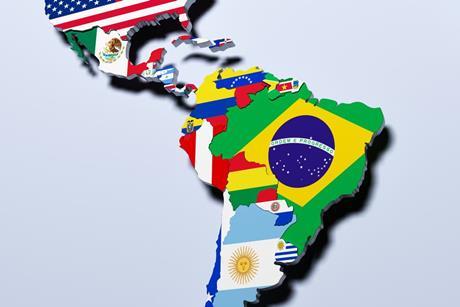
Regional spotlight: How El Niño could disrupt Latin America’s supply chains
A strengthening El Niño is bringing drought, flooding and infrastructure stress across Latin America, with agriculture, mining, logistics and energy facing different risks by country and sector.

How warehouse design can amplify lithium-ion battery risk
As lithium-ion battery volumes rise, TT Club says warehouse operators need to rethink storage density, racking, contractual controls and fire protection to stop an isolated failure escalating into a major loss.

FERMA Forum 2026: President urges risk professionals to challenge insurance cycle status quo and address AI paradox
Association leader encourages event attendees to “take risks” and “be open to leaving your comfort zone”

AI risk rises faster than organisations’ ability to manage it
AI has entered the top five business risks across short, medium and long-term horizons, but new FERMA research suggests organisations are struggling to build the governance and capabilities needed to keep pace.

FERMA Forum 2026: Leveraging insurance data for risk foresight is a “real opportunity”
Insurers seek to better harness unique client dataset to inform risk foresight – especially as today’s interconnected risk landscape calls for a partnership approach, rather than just a risk transfer transaction

Airmic 2026: Risk managers urged to focus on vulnerabilities as risks converge
Risk managers must look past heatmaps and risk registers to understand where interconnected threats could expose the business, Airmic delegates warned.

Climate risk exposes adaptation gaps in pharma supply chains
Almost nine in ten pharmaceutical companies expect climate-related disruption to their supply chains to increase, but new research suggests practical adaptation remains limited and supplier visibility is still a significant barrier.

No single route to lower-carbon freight as risk profiles diverge
Maritime, road, rail and air freight face very different safety, infrastructure and investment challenges as operators move away from fossil fuels.
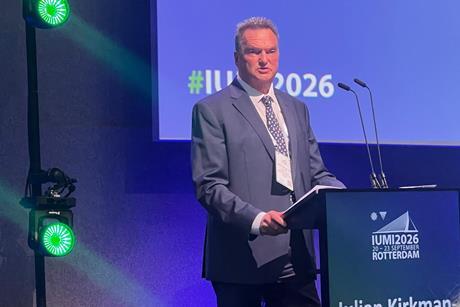
Supply chain disruption pushes risk managers to demand more from marine insurers
Corporate risk managers want marine insurers to move beyond traditional cargo cover and play a broader role in building supply chain resilience as geopolitical disruption, sanctions, cyber threats and longer transit routes intensify.
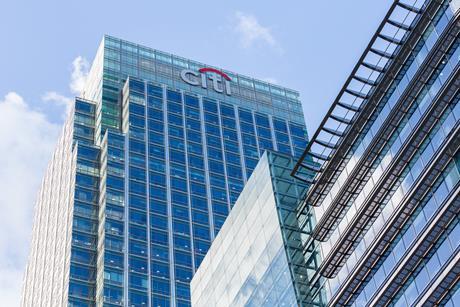
Case study: How sanctions pressure exposed gaps in Citibank’s controls
A £4.7m fine against Citibank’s London branch exposes how sanctions controls came under strain as alert volumes surged following Russia’s invasion of Ukraine.

Regulation watch: Frontier AI as a cyber weapon
Albert Yuen of Eversheds Sutherland examines regulatory developments in Asia and the UK/EU in response to the cyber risks posed by frontier AI models.
Opinion: The speed of risk – Why risk management is failing in real-time
Risk occurrence is unfolding at the speed of technology, while risk management is trundling along at the pace of governance, creating a dangerous mismatch. Risk professionals must switch up their thinking and review risk through three dimensions – magnitude, velocity and connectivity

FERMA Forum 2026: Risk must be reframed as opportunity to get the ear of company boards
Growth and profit driven organisation chief executives struggle to comprehend dense, technical risk language, so risk professionals need to pivot communication styles to land their messaging

Risk briefing: Active assailant preparedness exposes gaps in emergency response planning
More than four in five organisations have a security plan for active assailant incidents, but only 32% say they could notify everyone at an affected site within seconds, according to new research from ASIS International.
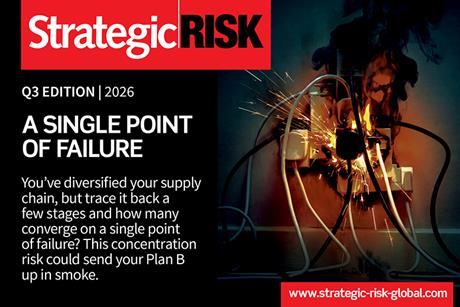
SR Q3 2026: When risks collide
The threats facing businesses may be familiar, but the way they are concentrating and cascading feels different. As one problem becomes five, risk managers need to understand where the weak points lie, and make sure their work changes what happens next.

Rare earth dispute exposes compliance collision in global supply chains
Chinese countermeasures against a major supply-chain due diligence body are beginning to collide with rare-earth trade, creating new problems for businesses trying to meet different regulatory requirements across global supply chains.


- Forgotten Password
- Contributors
- Feedback
- Media Pack
- © StrategicRISK 2026
Part of the Insurance and Risk group of
Newsquest Specialist Media
Newsquest Specialist Media



Published by Newsquest Media Group Limited,
registered in England & Wales with number 01676637
at The Echo Building, 18 Albert Road, Bournemouth,
England, BH1 1BZ - a USA Today company
registered in England & Wales with number 01676637
at The Echo Building, 18 Albert Road, Bournemouth,
England, BH1 1BZ - a USA Today company
Site powered by Webvision Cloud